Skip to main content


The Suffolk High Sheriff visits WS Training’s Ipswich Supported Learning Centre
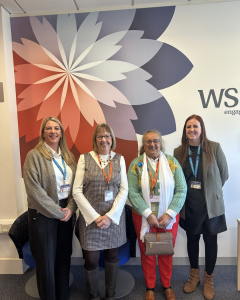
We were honoured to welcome the Suffolk High Sheriff, Gulshan Kayembe, and the High Sheriff’s Chaplain, Christine Laverock, to WS Training’s Supported Learning Centre in Ipswich.
The visit provided an opportunity to showcase the vital role supported learning plays in helping young people across Suffolk to develop confidence, independence, and pathways into education and employment.
During their visit, the Suffolk High Sheriff met with our Head of Education, Chloe Barnett, and Ipswich Centre Manager, Kerrie Taylor, to discuss learner support, community engagement, and inclusive education.
The visit from the Suffolk High Sheriff to WS Training
After signing in, Gulshan Kayembe and Christine Laverock were warmly welcomed and enjoyed a tour of the Ipswich centre. Learners and staff were visibly excited, smiling and waving as the Suffolk High Sheriff walked through the building. During the visit, learners were also meeting Father Christmas, and Gulshan took time to speak with them individually and join in with the festive celebrations.
Gulshan wrote on her recent social media post, “Now this is what I call a Christmas Party – cake, more cake and yet more cake! And to top it all, a present from Father Christmas! The students and staff at the WS Training SLC centre celebrated Christmas in style – and so well deserved it was too for them all given how hard they have worked over the year.”
The visit highlighted the positive impact of supported learning in Suffolk, and the importance of collaboration between education providers and local communities.
What is the role of the Suffolk High Sheriff and High Sheriff’s Chaplain?
The High Sheriff is an independent, voluntary, and non-political role that represents the Monarch within the county. The position is one of the oldest civic roles in the UK, with a history spanning over 1,000 years.
The Suffolk High Sheriff explained to our team her specific focus whilst in this role, but overall High Sheriff’s focus generally on:
- Supporting the judiciary, courts, and legal system
- Promoting community safety and social cohesion
- Championing the voluntary and charitable sector
- Recognising the work of emergency services
The Three Key Strands of the High Sheriff’s Role
The work of the High Sheriff is traditionally centred around three strands:
- Law and Order – supporting judges, magistrates, and the justice system
- Community and Voluntary Sector – highlighting charities and community-led initiatives
- Emergency Services – recognising police, fire, ambulance, and rescue services
You can learn more about the role here: What is a High Sheriff? – High Sheriffs’ Association
The Role of the High Sheriff’s Chaplain
The High Sheriff’s Chaplain provides pastoral and moral support throughout the year of office. The Chaplain often attends civic visits, supports community engagement, and offers reflection when addressing complex social issues.
What did the Suffolk High Sheriff and WS Training team discuss?
Discussions between the Suffolk High Sheriff, High Sheriff’s Chaplain and WS Training’s managers focused on:
- How learners discover WS Training through a variety of channels before applying
- The barriers young people face when progressing into adulthood and employment
- The importance of inclusive education across Suffolk
- How education providers and community leaders can work together to improve outcomes
- The Suffolk High Sheriff explained that she has identified an area of concern across Suffolk. She has recognised a growing need for the foundational level provision that we offer, particularly in response to high dropout rates at Level 1.
- There was extensive discussion around our Supported Internship programme. It was noted that many of our learners experience anxiety when entering the workplace, which is why we provide experienced job coaches to support them throughout their placements.
The High Sheriff also shared that, in her visits, she has spoken to many young people and has yet to meet one who hasn’t shown ambition. While they may not have discovered their exact path yet, they all have a sense of wanting to achieve something, whether that’s becoming a footballer or pursuing another goal. She emphasised the importance of exposing young people to universities and career opportunities at an early age, providing them with the chance to explore possibilities, engage in career discussions, and understand their purpose and how to achieve it.
The visit also provided learners with a valuable opportunity to see local leadership engaging directly with education and community services.
About WS Training
Who We Are
We discussed who we are as WS Training: an independent training provider delivering supported learning, commercial training, and apprenticeships across Suffolk. We work with learners of all abilities, supporting them to develop skills, build confidence, and achieve meaningful progression opportunities.
Our Supported Learning Centres across Suffolk
Our team explained to the Suffolk High Sheriff that we have three Supported Learning Centres across Suffolk, including:
- Ipswich
- Lowestoft
- Haverhill
Together, we discussed each location in turn, exploring the specific challenges and strengths they experience within their local communities. We also shared more information about the organisations we work with at each site.
The learners we support
We shared how our supported learning programmes help young people who:
- Have additional learning needs
- Require support with employability and life skills
- Would benefit from smaller class sizes and tailored learning
- Need support with building confidence, independence, and resilience
Gulshan commented, “Most fab of all was knowing that we have such a wonderful facility for training on our doorstep in Ipswich; the courses are tailored specifically to the students’ levels and students who might not get opportunities elsewhere can get placements on a good range of courses.”
Supporting education and the community in Suffolk
Visits from civic leaders such as the Suffolk High Sheriff and High Sheriff’s Chaplain play an important role in raising awareness of the challenges and opportunities facing young people in education today.
By strengthening links between education providers, community organisations, and local leadership, we can continue to support learners across Suffolk to achieve positive futures.
We would like to thank Gulshan Kayembe, Suffolk High Sheriff, and Christine Laverock, High Sheriff’s Chaplain for visiting our Ipswich Supported Learning Centre and for their continued commitment to supporting communities throughout Suffolk during the year in their roles.